3 Critical Advantages of JINPAT Slip Rings for Humanoid Robotics
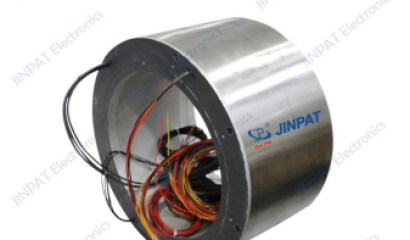
This article provides an in-depth analysis of the performance advantages of the JINPAT LPT series (through-bore slip rings), aiming to address the challenges of cabling and signal transmission encountered during humanoid robot development.
2026-06-27 13:44 by admin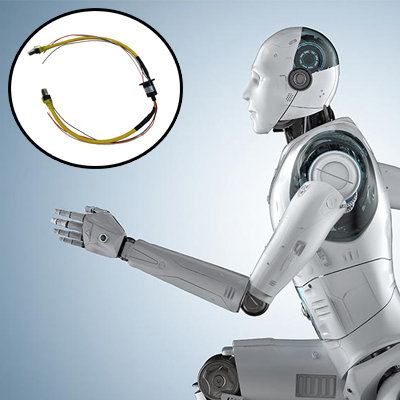
- Share
-

-

-

-

-

In the development of humanoid robots, joint design is critical to overall performance. Recently, many engineers have reported encountering bottlenecks regarding cabling and signal transmission when attempting to increase degrees of freedom and sensing precision. To address this, we have compiled three common questions and answers regarding the JINPAT LPT series (through-bore slip rings) to assist you in the selection process:
Q1: Why use LPT through-bore slip rings instead of traditional cabling methods?
A: Traditional cabling methods often lead to cable twisting or even breakage during continuous robot rotation. The LPT series features a through-bore design that allows power, Ethernet, and GMSL cables to pass directly through the center of rotation. This completely eliminates cable tangling issues, resulting in more compact joint structures and smoother operation.
Q2: How stable is the communication when handling high-speed vision and control signals?
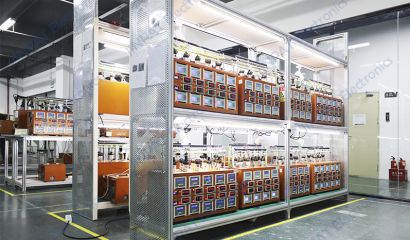
A: Efficient data exchange between vision sensors and controllers is essential. The LPT series has undergone extensive electrical performance optimization and fully supports Ethernet and GMSL signals. Thanks to superior electromagnetic shielding technology, the product offers robust anti-interference capabilities, ensuring low latency and high data integrity even in environments with motor interference.
Q3: How should slip rings be positioned within the robot?
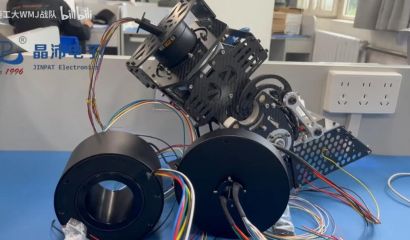
A: Humanoid robots possess multiple degrees of freedom, typically requiring slip rings at various joints such as the neck, waist, and limbs. The LPT series offers excellent installation consistency and supports distributed layouts. We recommend selecting specific models based on the load and signal type of each joint; through multi-point coordination, you can build an efficient power and information transmission network that spans the robot's entire internal structure.
As humanoid robot technology advances to higher levels, selecting a stable and reliable signal transmission hub has become a prerequisite for achieving autonomous operation. Please feel free to contact us if you have specific requirements regarding dimensions or communication protocols; we would be happy to provide recommendations for a customized integration solution.