Comparison of Traditional Slip Rings and JINPAT Slip Rings in Oil Drilling Applications
What are the key defects of traditional slip rings in oil drilling operations? How does JINPAT high-current slip ring technology systematically solve these problems? This article will conduct a direct comparative analysis from five key dimensions.
2026-04-27 14:32 by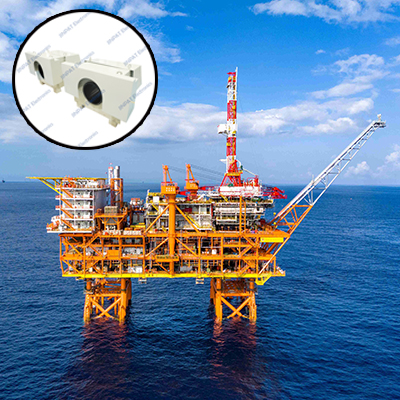
- Share
-

-

-

-

-

The oil drilling environment is inherently complex, a factor that increasingly highlights the pain points of traditional slip rings. The following sections will conduct a comparative analysis from five key dimensions:
1. Structural Comparison: Solid Shaft VS Large Through-Hole
Traditional: Mostly solid or small-diameter, requiring offset installation, resulting in a bulky system prone to vibration.
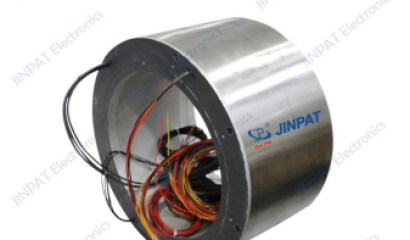
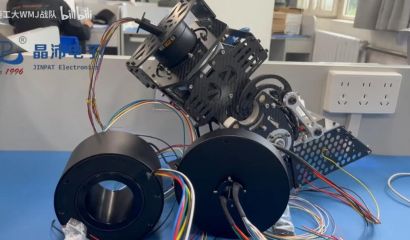
JINPAT: Features ultra-large through-holes of 100-980mm, supporting coaxial passage of the spindle and hydraulic lines, with a compact structure and more stable operation.
2. Protection Comparison: Low Sealing Value VS IP65
Traditional: Insufficient protection level, easily allowing salt spray and mud intrusion, leading to short circuits.
JINPAT: A rigorous IP65 fully sealed design, combined with a 316 stainless steel/aluminum alloy casing, completely blocks corrosion from harsh environments.
3. Wiring Comparison: Fixed Lead Wires VS Self-Wiring
Traditional: Fixed lead wire lengths, often requiring secondary adapters on-site, time-consuming and labor-intensive.
JINPAT: Open wiring chamber, supporting customer self-installation of cables, on-site cutting and crimping as needed, reducing installation time by 50%.
4. Maintenance Comparison: Disassembly and Inspection VS Transparent Window
Traditional: Inspecting brushes requires complete disassembly, necessitating lifting tools, and often resulting in downtime of half a day.
JINPAT: Innovative transparent observation window, allowing for visual inspection of operating status; combined with a side-opening maintenance port, routine maintenance can be completed by a single person in just over ten minutes.
5. Cost Comparison: Low-Price Trap VS Long-Term Benefits
Traditional: Inexpensive initial purchase, but the huge losses from frequent downtime far exceed the value of the equipment itself.
JINPAT: Through its long-life design and rapid maintenance, downtime losses are reduced by more than 80%, and most users can recover costs through maintenance savings within six months.
[Case Study]
Following the installation of JINPAT slip rings on an offshore platform, annual downtime caused by equipment failure plummeted from 26 hours to just 2 hours. These results conclusively demonstrate that a large through-bore, robust environmental protection, ease of wiring, and visual inspectability are precisely the core requirements that modern drilling platforms demand from their slip rings.